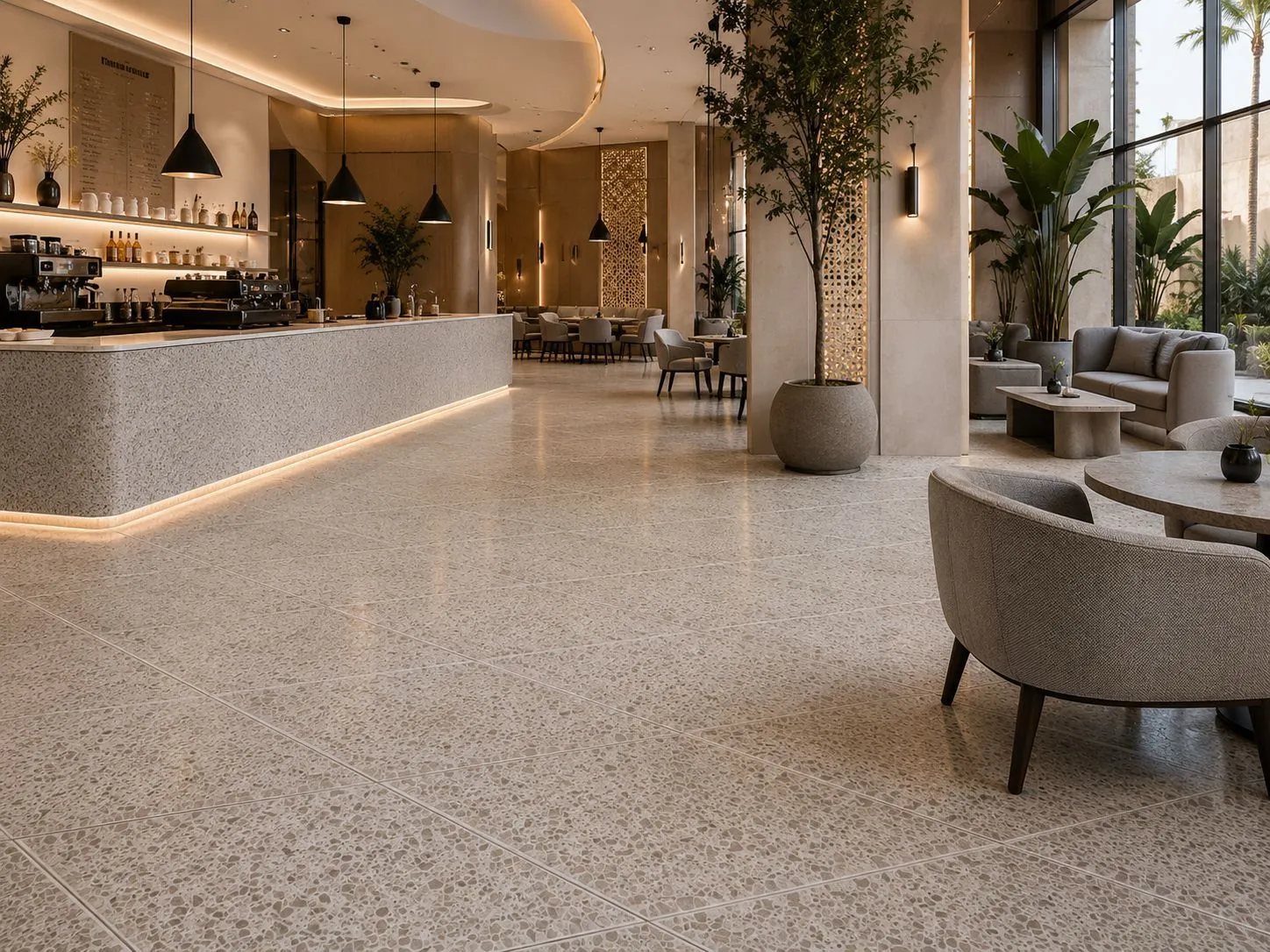
Terrazzo has moved far beyond the familiar speckled floor. In current Middle East architecture, it can look calm and mineral, bold and graphic, or close to natural stone. The same material language can continue across floors, stairs, walls, counters and custom pieces.
For projects in Saudi Arabia and Bahrain, the important decision is not simply whether to use terrazzo. The system, aggregate, thickness, joint layout and final surface all need to suit the building. A hotel lobby in Riyadh, a restaurant in Manama and a private villa bathroom may share a design direction, but they should not automatically share one specification.
Arab Crete supports terrazzo flooring and finish selection for architects, consultants, contractors, developers and private clients. This guide explains the choices worth settling before samples, drawings and quotations are approved.
What Is Terrazzo Flooring?
Terrazzo is a composite surface made from decorative aggregate held in a cement-based or resin-based binder. Marble, granite, quartz, glass and other suitable chips can be used. Once the material has cured, the surface is ground to expose the aggregate, then honed or polished to produce the required appearance.
The term covers several ways of making a surface; it does not identify one fixed build-up. A factory-made tile, a cement-based floor installed on site and a thin resin system may look related, yet their programme, jointing and exposure limits can be very different.
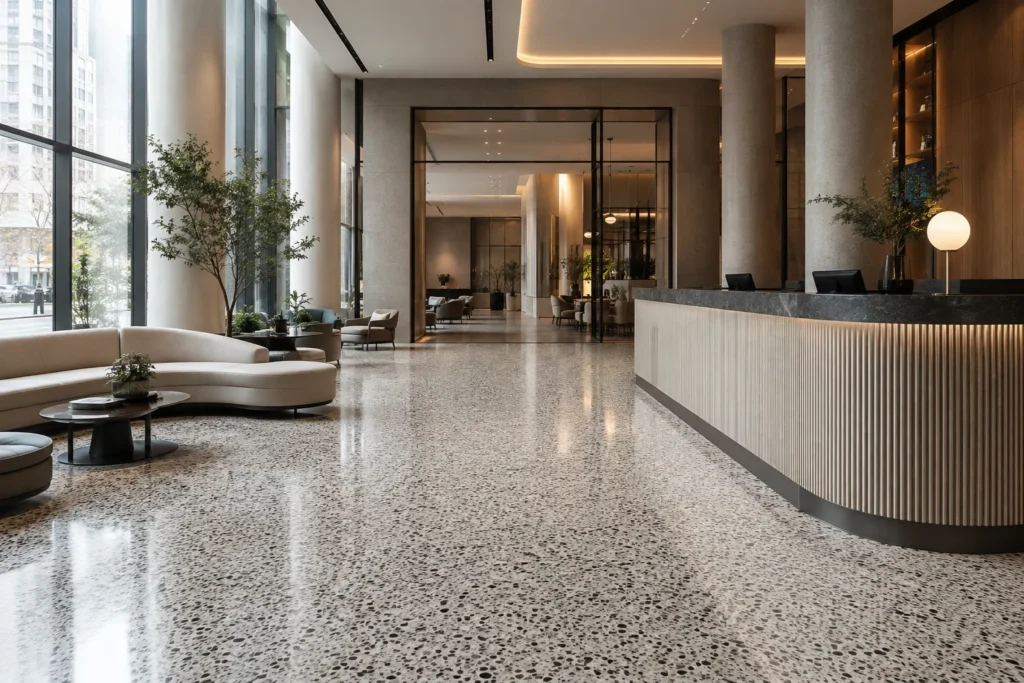
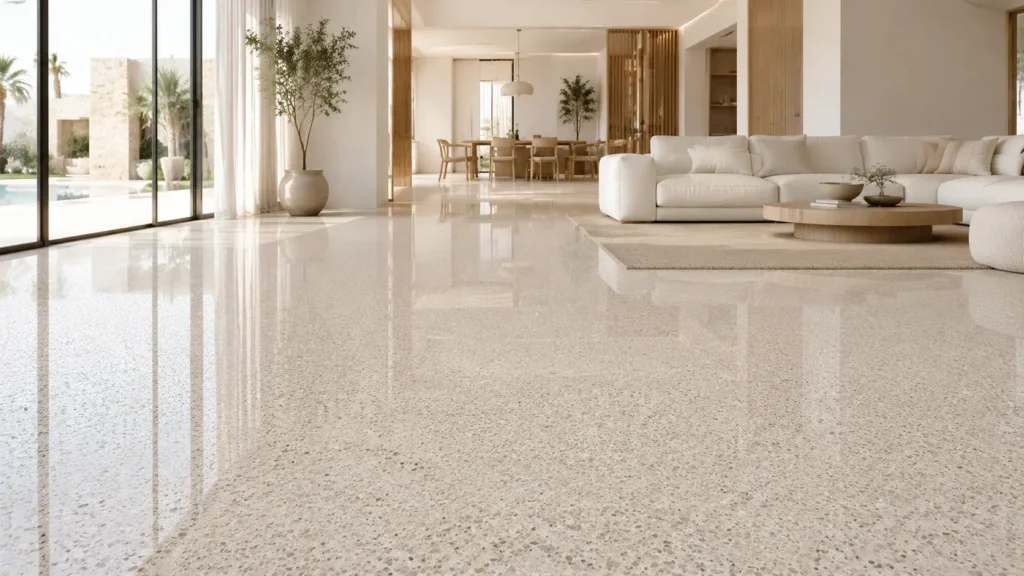
Why Terrazzo Suits Gulf Projects
Buildings in the Gulf often combine heavy foot traffic, fine dust at entrances, strong sunlight near glazed areas and frequent cleaning. Exterior finishes may also face intense heat and wider temperature movement. In hotels, malls, restaurants, offices and public buildings, a surface must perform without losing the character that made the designer choose it.
A correctly specified terrazzo floor can meet these demands because it is hard-wearing, repairable and highly adaptable in colour and aggregate. It can support warm local stone palettes, quiet contemporary interiors or precise brand colours. Its long service potential can also make whole-life value more important than the lowest supply price.
Precast, Cement-Based or Resin Terrazzo?
The most useful starting point is to compare how the surface will be made and installed. No option is automatically superior; each solves a different project problem.
| System | Often suits | Confirm before specification |
| Precast tiles and slabs | Modular floors, stairs, skirting, counters and repeated components | Tile size, thickness, joint width, shade range, setting system and replacement access |
| Cement-based cast-in-situ | Continuous floors, warm stone colours, custom borders and selected exterior uses | Build-up, cure time, movement joints, cracking strategy, moisture and final sealer |
| Resin-based cast-in-situ | Thin decorative floors, detailed colour work and demanding interior programmes | Substrate moisture, UV exposure, thermal movement, formulation, slip performance and technical data |
System names describe broad families. Final suitability depends on the manufacturer’s data, project requirements and site assessment.
Precast Terrazzo Tiles and Slabs
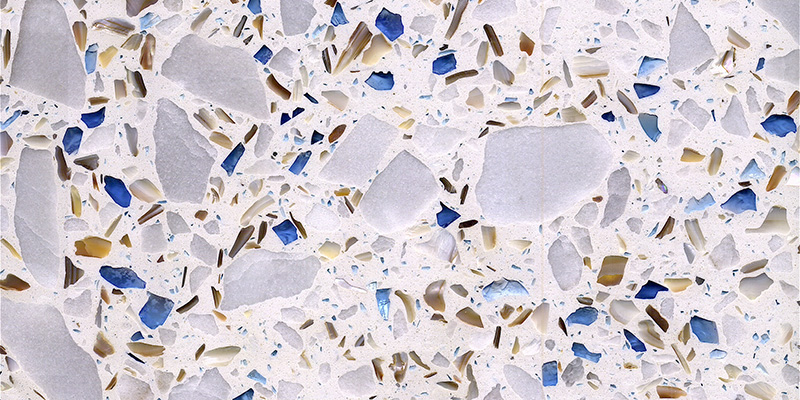
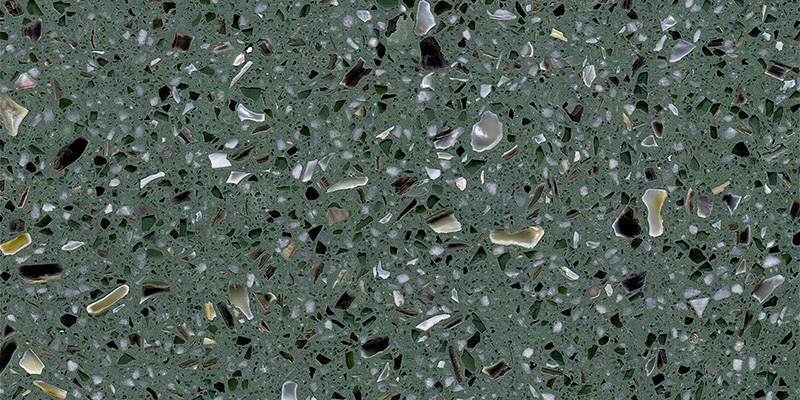
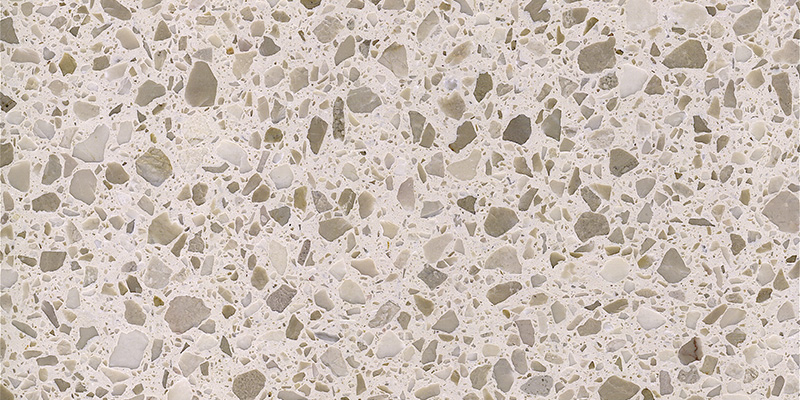
Precast units are manufactured under controlled conditions before delivery. They are well suited to floors with a modular layout, stair treads, risers, skirting, wall pieces, vanity tops, counters, furniture and repeated architectural components. Explore available precast terrazzo tiles and slabs from IftiStone when the design requires factory-made formats.
Terrazzo tiles can reduce wet work on site and make individual units easier to replace. The trade-off is a visible joint pattern. Tile size, shade variation, grout colour, setting material, movement joints and substrate flatness should be coordinated rather than left until installation.
Cast-in-Situ Terrazzo
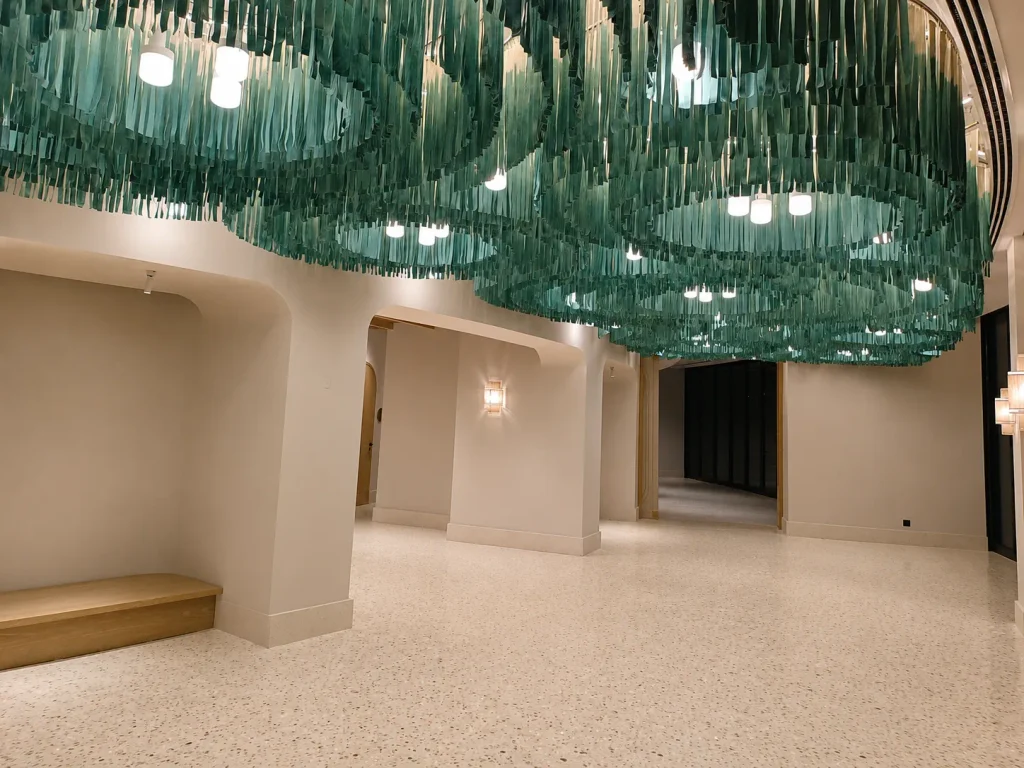
Cast-in-situ terrazzo is mixed and placed over a prepared substrate at the project. It is often chosen for broad floor areas, custom colour fields, borders, logos and patterns where fewer visible tile joints are preferred. Divider strips can define panels and design changes, but they do not replace structural or movement-joint planning.
Cement-based and resin-based cast systems have different thicknesses, curing behaviour and exposure limits. The project team should confirm the full build-up and technical data instead of selecting only from a photograph.
Terrazzo Finishing: Polished, Honed or Textured
Terrazzo finishing changes both the appearance of the aggregate and the way the surface behaves in use. After the system has cured sufficiently, the contractor normally grinds the surface with diamond tools, fills small voids where required, then continues through finer stages to reach the agreed finish. Cleaning, sealing and final protection follow according to the system.
Polished finish
A polished floor has stronger light reflection and a refined appearance. It is often used in lobbies, reception areas, showrooms and selected retail interiors. The maintenance plan and slip requirement still need to match the space.
Honed or low-sheen finish
A honed surface has less reflection and can feel softer and more natural. It is a practical design choice where the project wants exposed aggregate without a glossy look.
Textured finish
A textured or rustic cement-based finish may be considered for suitable exterior or wet-prone areas. Selection should be based on tested performance, cleaning needs, and the approved sample, not on the word textured alone.
Where Terrazzo Can Be Used
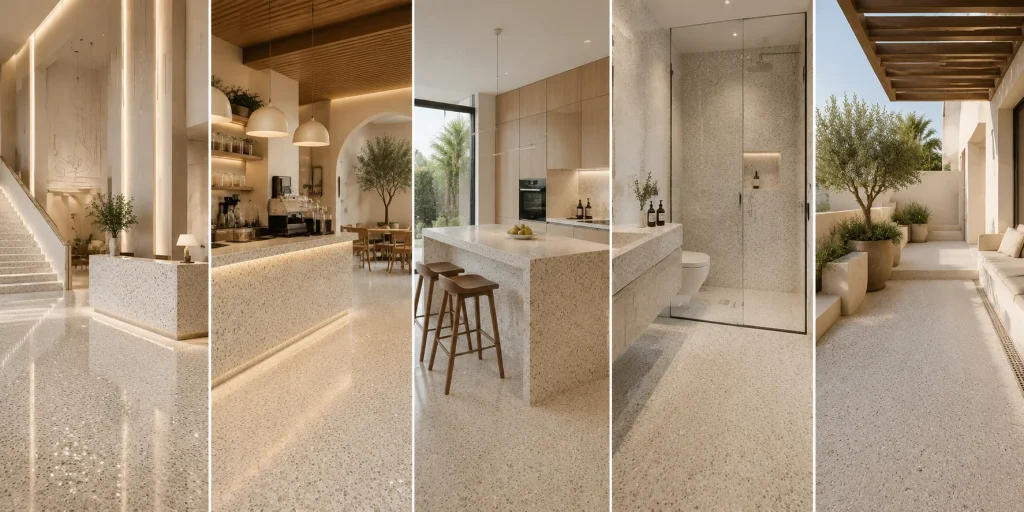
Hotels, malls and commercial interiors
Large circulation areas benefit from a coordinated floor design, clear joint strategy and samples viewed under the project’s actual lighting. Cast-in-situ work can create visual continuity, while matching precast pieces can carry the design onto stairs, reception counters and washroom vanities.
Restaurants and coffee shops
In front-of-house areas, the surface can connect flooring with bar fronts, counters and feature elements. Back-of-house spaces face different loads, including grease, heat and aggressive cleaning, so they should be specified separately rather than treated as an extension of the dining floor.
Kitchens and bathrooms
In kitchens, cement-based surfaces should be sealed as specified, and acidic spills should be cleaned promptly when marble aggregate is present. Neutral cleaning products are usually the safer routine choice. In bathrooms, the visible finish is not a substitute for waterproofing. Falls to drains, membranes, movement joints and wet-area slip performance must be designed as part of the complete build-up.
Exterior areas
Selected cement-based systems may be suitable outdoors when the build-up, drainage, texture, thermal movement and maintenance plan are designed for exposure. Not every resin or tile system belongs outside, so the supplier’s current technical data and the project specification must govern the choice.
How Terrazzo Installation and Finishing Work
The visible surface is only the final stage. A dependable floor begins with the substrate and follows a controlled sequence:
- Assess the substrate for strength, flatness, cracks, movement and moisture.
- Confirm the system build-up, levels, divider strips and movement-joint layout.
- Approve a representative sample or mock-up under realistic lighting.
- Prepare the substrate and set out the floor before mixing or fixing begins.
- Place the cast system, or install the precast units, using the approved method.
- Allow the required cure before grinding, grouting pinholes, honing or polishing.
- Apply the specified sealer if required, clean the surface and protect it from following trades.
Rushing substrate work, curing or early protection can create defects that later polishing will not hide. The programme should therefore include enough time for samples, approvals, installation, finishing and handover protection.
What to Confirm Before Ordering or Quoting
A useful terrazzo enquiry gives the supplier enough information to recommend a system rather than guess. Confirm:
- Project location and whether the area is internal, external, dry or regularly wet.
- Approximate area, room use, traffic level and expected service conditions.
- New or existing substrate, available build-up and known moisture or cracking concerns.
- Required format: continuous floor, terrazzo tiles, slabs, stairs or custom pieces.
- Colour direction, aggregate type, chip size, divider-strip material and approved sample size.
- Target sheen, cleaning method and any stated slip-resistance requirement.
- Programme, access, sequencing with other trades and protection after completion.
Maintaining Terrazzo in Saudi Arabia and Bahrain
Terrazzo is low maintenance, but it is not maintenance-free. Remove dust and fine grit before foot traffic grinds it into the surface. Clean spills promptly and use products compatible with the binder, aggregate and sealer. Acidic cleaners can damage marble-rich cement terrazzo.
Well-sized entrance matting is especially helpful in Gulf buildings because it captures sand before it reaches polished interior floors. Over time, the maintenance plan may include joint and sealer inspections, local repairs, and re-honing or re-polishing, depending on the system and level of use.
Terrazzo Flooring Services in Saudi Arabia and Bahrain
Arab Crete works with project teams on material selection, samples, custom mixes, precast elements and on-site application, depending on the scope. The Riyadh and Manama offices provide a direct starting point for projects in Saudi Arabia and Bahrain.
Planning a terrazzo project? Share the location, drawings, approximate area, intended use, and preferred finish. Contact ArabCrete to discuss the specification and request a quotation.
Frequently Asked Questions
Is terrazzo flooring suitable for high-traffic buildings?
Yes, when the system, substrate, joints and maintenance plan are selected for the expected traffic. It is commonly considered for hotels, malls, offices, public buildings and other busy interiors.
What is the difference between terrazzo tiles and cast-in-situ flooring?
Tiles and slabs are made before delivery and installed in a modular layout with visible joints. Cast-in-situ material is placed and finished on the project, allowing larger continuous colour fields and custom patterns.
Which terrazzo finish is best?
There is no single best finish. Polished surfaces suit refined dry interiors; honed finishes reduce reflection; textured finishes may suit selected wet-prone or exterior areas. The required look, slip performance and cleaning plan should decide.
Can terrazzo be used outdoors in Saudi Arabia and Bahrain?
Some cement-based systems can be designed for exterior exposure. Drainage, thermal movement, surface texture and technical data must be checked. Do not assume that every resin system or terrazzo tile is suitable outside.
Can terrazzo be used in bathrooms?
Yes, if waterproofing, falls, drainage, movement joints and wet-area slip performance are designed with the finish. The decorative layer alone does not waterproof the room.
What affects the cost, programme and quotation?
The main factors include system type, thickness, aggregate, colour complexity, divider strips, floor area, substrate preparation, access, curing and the number of stairs or custom pieces. Send the location, drawings, approximate quantities, room use and target finish for a useful quotation and programme review.
